

Understanding the Evolving Regulatory Environment
The financial sector in the United Arab Emirates has experienced remarkable growth over the past decade, attracting investment firms, fintech companies, wealth managers, and capital market participants from around the world. As the market continues to expand, regulatory authorities are expected to introduce new frameworks that strengthen transparency, improve investor protection, and support sustainable economic development. Businesses seeking or maintaining Securities and Commodities Authority licensing should recognize that regulatory requirements are never static. Every update reflects changing market conditions, technological advancements, and international compliance expectations. At Keepers Compliance, we understand that preparing for future regulations is just as important as meeting today’s licensing standards because proactive planning often reduces business disruptions.
Why SCA Regulations Continue to Evolve
Financial regulators around the world constantly adjust their policies to address emerging risks and new business models, and the UAE is no exception. The Securities and Commodities Authority continuously reviews its regulatory framework to ensure the country’s financial markets remain competitive while maintaining strong governance standards. Increasing international investments, digital financial services, and cross border transactions create new challenges that require updated compliance measures. Regulatory evolution also allows authorities to respond to global financial developments and recommendations from international organizations. Businesses that anticipate these changes are often in a stronger position to adapt quickly without delaying operations or licensing renewals. Staying informed allows organizations to treat compliance as an ongoing strategy rather than a one time requirement.
Greater Focus on Corporate Governance Standards
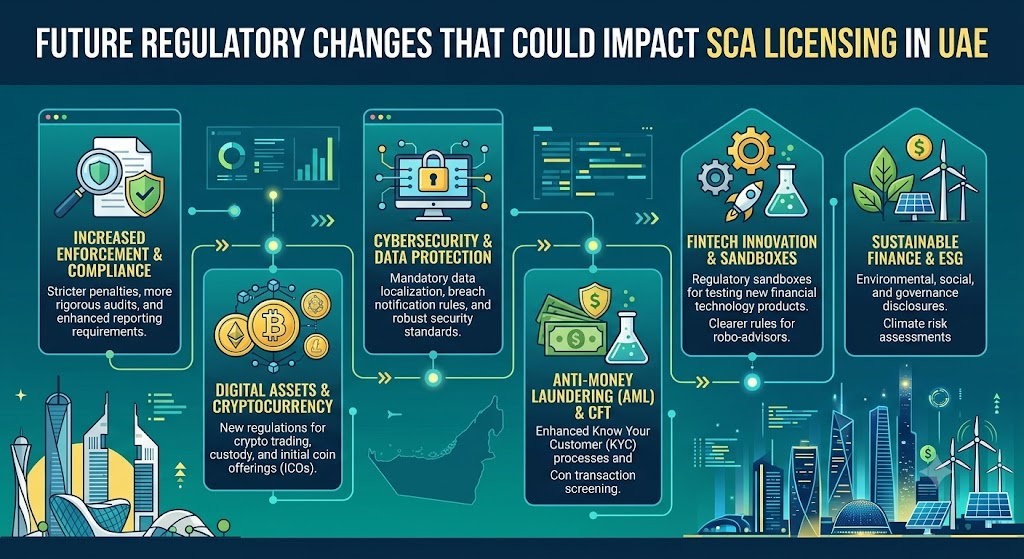
One of the most likely areas of future regulatory development is enhanced corporate governance. Regulators increasingly expect licensed entities to demonstrate effective oversight, independent decision making, and clearly documented internal controls. Businesses may be required to strengthen board responsibilities, improve conflict of interest policies, and provide greater transparency regarding management structures. Enhanced governance standards help build investor confidence while reducing operational risks throughout financial institutions. Companies that establish robust governance practices before regulations become mandatory often experience smoother compliance processes. Preparing governance frameworks today can significantly reduce future regulatory adjustments.
Enhanced Compliance Monitoring and Reporting
Future regulatory updates may require more frequent reporting and expanded compliance monitoring from licensed organizations. Authorities worldwide are moving toward continuous supervision rather than relying solely on periodic reviews or annual submissions. This approach enables regulators to identify potential issues earlier while encouraging stronger operational accountability. Businesses should expect increased expectations regarding record keeping, documentation accuracy, and timely submission of regulatory information. Internal compliance teams may need to implement more sophisticated monitoring systems capable of identifying risks before they become regulatory concerns. Organizations that invest in efficient reporting processes now will likely find future regulatory transitions much easier to manage.
Digital Transformation and Regulatory Technology
Technology continues to reshape financial services, and regulators are adapting accordingly. Future SCA licensing requirements could include greater expectations for cybersecurity, digital record management, automated compliance monitoring, and secure data protection practices. Regulatory technology solutions are becoming valuable tools that help organizations monitor transactions, maintain compliance records, and generate required reports more efficiently. Digital systems also improve transparency while reducing manual errors that can affect regulatory compliance. Businesses embracing technology early may gain a competitive advantage when new digital compliance standards become mandatory. Modern compliance increasingly depends on both qualified professionals and intelligent technological infrastructure.
Stronger Anti Money Laundering Expectations
Anti money laundering regulations remain a global priority, and future changes are expected to reinforce existing compliance obligations. Licensed businesses may face enhanced customer due diligence requirements, improved beneficial ownership verification, and more detailed transaction monitoring expectations. Regulatory authorities are continuously improving methods for identifying suspicious financial activities while promoting greater cooperation between financial institutions. Organizations should prepare by regularly reviewing their internal AML policies and ensuring employees receive updated compliance training. Effective risk assessments and documented procedures demonstrate a company’s commitment to regulatory excellence. Building strong AML systems today positions businesses for smoother adaptation to future licensing requirements.
Greater Oversight of Virtual Assets and Digital Finance
The rapid expansion of virtual assets and digital financial products is influencing regulatory priorities across many jurisdictions. As blockchain technologies and digital investment platforms continue to evolve, regulators may introduce additional licensing requirements for organizations operating within these sectors. Businesses involved in tokenized assets, digital securities, or innovative financial technologies should expect increased regulatory attention. Future regulations could emphasize investor protection, operational transparency, technology risk management, and secure custody practices. Companies entering these markets should establish comprehensive compliance frameworks even before new rules become mandatory. Early preparation demonstrates a commitment to responsible innovation while reducing regulatory uncertainty.
Increased Environmental, Social, and Governance Considerations
Environmental, social, and governance principles are becoming increasingly important within global financial regulation. Investors are paying greater attention to sustainability practices, ethical governance, and responsible investment strategies when evaluating financial institutions. Future SCA licensing expectations may include additional disclosures related to ESG practices, sustainability reporting, or governance responsibilities. Businesses that voluntarily develop ESG frameworks now may find themselves better prepared for evolving regulatory expectations. Strong ESG practices also enhance corporate reputation and strengthen relationships with investors and stakeholders. Regulatory alignment with global sustainability initiatives appears likely to continue in the coming years.
Higher Expectations for Risk Management Frameworks
Risk management remains one of the most critical components of financial regulation, and future licensing standards may require even more comprehensive risk assessment processes. Organizations could be expected to demonstrate stronger operational resilience, business continuity planning, cybersecurity preparedness, and enterprise wide risk governance. Regulators increasingly prefer businesses that proactively identify vulnerabilities before they create compliance issues. Comprehensive documentation, regular internal reviews, and ongoing risk monitoring contribute to stronger regulatory outcomes. Businesses that integrate risk management into daily operations are generally better positioned to satisfy evolving licensing expectations. Proactive risk management also supports long term organizational stability.
Cross Border Compliance and International Alignment
As the UAE continues strengthening its position as a global financial center, regulatory frameworks are expected to align even more closely with international standards. Cross border investment activity requires greater consistency between regulatory systems while maintaining the UAE’s unique legal environment. Businesses operating internationally should anticipate increased cooperation between regulatory authorities across multiple jurisdictions. This may lead to enhanced reporting obligations, improved transparency requirements, and stronger international compliance expectations. Organizations with multinational operations should regularly evaluate whether their compliance frameworks satisfy both domestic and international regulatory requirements. Cross border readiness will become increasingly valuable as financial markets continue to globalize.
Preparing Your Business for Future Licensing Requirements
Rather than waiting for new regulations to become effective, businesses benefit from adopting a forward looking compliance strategy. Regular internal audits, policy reviews, employee training, governance improvements, and technology investments create a stronger foundation for regulatory adaptation. Organizations should also monitor official regulatory announcements and evaluate how potential changes could affect their licensing obligations. Proactive planning reduces operational disruptions while allowing businesses to implement improvements gradually instead of responding under strict deadlines. Working with experienced compliance professionals can provide valuable guidance when interpreting regulatory developments. Keepers Compliance helps organizations build flexible compliance frameworks that remain effective even as regulatory expectations continue to evolve.
The future of SCA licensing in the UAE will likely reflect increasing emphasis on transparency, technology, governance, investor protection, and international regulatory alignment. While no organization can predict every regulatory amendment, businesses can prepare by strengthening compliance systems, investing in governance, and embracing continuous improvement. Organizations that view compliance as a strategic advantage rather than a legal obligation are often better equipped to respond to regulatory change with confidence. Maintaining readiness not only supports successful licensing but also strengthens operational efficiency and market credibility. Keepers Compliance remains committed to helping businesses navigate evolving regulatory landscapes with practical guidance and comprehensive compliance support. By staying informed and planning ahead, organizations can confidently position themselves for long term success within the UAE’s dynamic financial sector.