

Understanding the Growth of Digital Investment Platforms in the UAE
The United Arab Emirates has become one of the most attractive destinations for financial innovation, making digital investment platforms an important part of the country’s evolving financial ecosystem. Investors now expect seamless access to stocks, funds, digital assets, and other financial products through secure online platforms. This rapid transformation has encouraged regulators to establish clear legal frameworks that protect investors while supporting innovation. Businesses entering this sector must understand that operating without the appropriate authorization can create significant legal and operational risks. As more fintech companies enter the market, regulatory compliance is becoming a competitive advantage rather than simply a legal obligation. At Keepers Compliance, we help businesses understand these evolving requirements so they can build a strong foundation for long term success.
What Is an SCA License and Why Does It Matter?
The Securities and Commodities Authority, commonly known as the SCA, regulates securities markets and investment related activities throughout the UAE. Its licensing framework ensures that organizations providing investment services meet strict standards for governance, transparency, financial stability, and consumer protection. A digital investment platform that offers investment products or facilitates investment related transactions may require authorization before commencing operations. This licensing process demonstrates that a company has implemented appropriate controls to protect investors and maintain market integrity. Regulatory oversight also increases public confidence, making licensed businesses more attractive to both retail and institutional clients. Obtaining the appropriate authorization is therefore a strategic step that supports sustainable business growth.
Which Digital Investment Platforms May Need SCA Licensing?
Not every financial technology company falls under the same regulatory category, but many digital investment businesses are subject to SCA oversight. Platforms that facilitate securities trading, investment advisory services, portfolio management, crowdfunding involving regulated investments, or certain digital asset activities may require licensing depending on their business model. Even companies that primarily operate through mobile applications or cloud based platforms are expected to comply with applicable financial regulations. The exact licensing requirements depend on the products offered, customer base, transaction structure, and operational model. Companies should avoid assuming that technology driven services automatically fall outside regulatory supervision. Careful legal analysis at the planning stage helps determine the correct licensing pathway.
The Importance of Early Regulatory Planning
Many startups focus heavily on technology development while postponing regulatory planning until just before launch. This approach often results in unexpected delays, increased compliance costs, and changes to business operations that could have been avoided. Regulatory expectations frequently influence platform architecture, onboarding procedures, customer verification systems, and internal governance structures. Integrating compliance into the business strategy from the beginning allows organizations to build scalable systems that satisfy regulatory expectations. Investors and funding partners also appreciate businesses that demonstrate regulatory readiness during early growth stages. Early planning ultimately reduces uncertainty and supports smoother market entry.
Key Compliance Requirements for Applicants
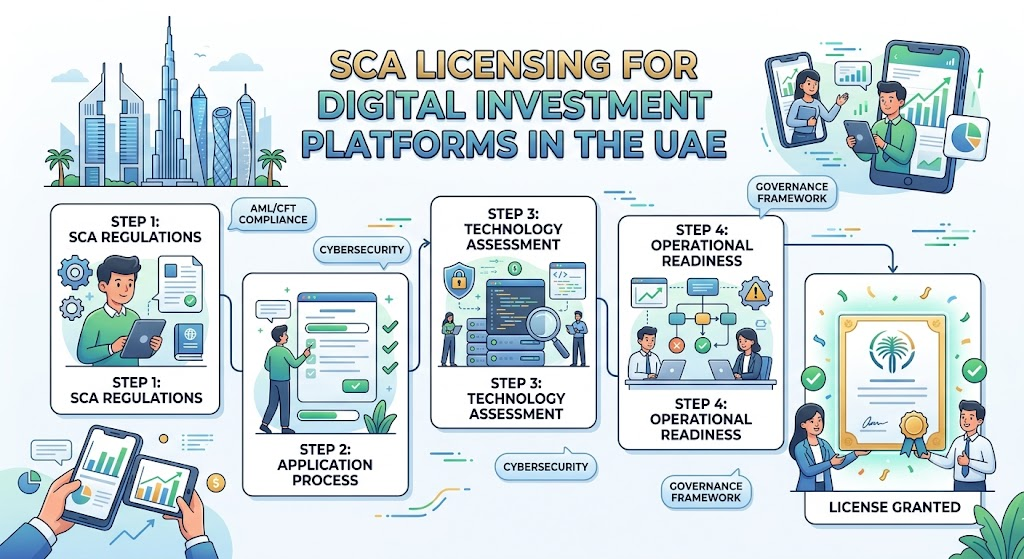
The licensing process involves much more than submitting an application form. Regulators generally examine corporate governance, ownership structures, financial resources, internal control frameworks, cybersecurity measures, operational resilience, and risk management procedures. Companies must also establish comprehensive compliance policies that address anti money laundering obligations, customer due diligence, transaction monitoring, and record keeping practices. Employee qualifications and management experience are often evaluated to ensure competent leadership. Technology infrastructure should support secure operations while maintaining data confidentiality and system reliability. Demonstrating readiness across all these areas significantly strengthens a company’s licensing application.
Corporate Governance Plays a Central Role
Strong governance is one of the most important components of regulatory approval for digital investment platforms. Decision making responsibilities should be clearly defined, with accountability established across management and board level functions. Organizations are expected to maintain policies that address conflicts of interest, ethical conduct, business continuity, and operational oversight. Effective governance also includes independent monitoring of compliance activities and regular internal reviews. Regulators seek evidence that senior management actively supports compliance rather than treating it as a routine administrative requirement. A well governed organization is better equipped to manage operational risks while protecting investor interests.
Technology and Cybersecurity Expectations
Digital investment platforms depend on technology to deliver secure financial services, making cybersecurity a significant regulatory priority. Companies should implement robust security measures to protect customer information, financial transactions, and confidential business data from unauthorized access. Secure authentication, encryption, continuous monitoring, and incident response planning all contribute to a resilient technology environment. System availability is equally important because investors expect uninterrupted access to their accounts and transactions. Regular testing and ongoing security assessments help identify vulnerabilities before they become serious threats. Maintaining a secure digital infrastructure supports both regulatory compliance and customer trust.
Anti Money Laundering and Customer Verification
Financial service providers operating in regulated environments must implement comprehensive anti money laundering controls. Customer verification procedures should accurately identify clients while assessing potential financial crime risks throughout the business relationship. Risk based monitoring enables organizations to identify unusual transactions that may require further investigation or reporting. Employee training also plays an essential role because staff members need to recognize suspicious activities and understand their reporting responsibilities. Maintaining accurate documentation supports regulatory inspections and demonstrates compliance with applicable legal obligations. Effective financial crime controls protect both the organization and the broader financial system.
Managing Risk in a Digital Investment Environment
Every investment platform faces operational, financial, technological, legal, and reputational risks that require ongoing management. A comprehensive risk management framework allows businesses to identify potential issues before they affect customers or regulatory compliance. Risk assessments should be updated regularly as new products, technologies, and market conditions emerge. Internal controls should evolve alongside business growth to address increasing operational complexity. Periodic audits and compliance reviews provide valuable insights into areas requiring improvement. Continuous monitoring strengthens organizational resilience while supporting long term regulatory expectations.
Preparing Documentation for the Licensing Process
A successful licensing application depends heavily on well prepared documentation that accurately reflects business operations. Regulators typically expect detailed business plans, governance documents, compliance manuals, financial projections, organizational charts, and operational procedures. Policies should clearly explain how the company manages customer onboarding, transaction processing, complaint handling, cybersecurity, and regulatory reporting. Incomplete or inconsistent documentation can significantly extend review timelines and increase requests for additional information. Every document should align with the actual operating model of the business. Careful preparation creates a more efficient application process and demonstrates organizational maturity.
Common Challenges Businesses Encounter
Many businesses underestimate the complexity of financial regulation when entering the digital investment sector. Some organizations struggle with unclear licensing classifications, while others face difficulties developing governance frameworks that satisfy regulatory expectations. Technology startups may also find it challenging to balance innovation with compliance requirements, particularly when introducing new financial products. Delays often occur because internal policies are incomplete or operational procedures have not been fully documented. Changes in business strategy during the application process can create additional regulatory considerations. Working through these challenges proactively helps organizations avoid unnecessary setbacks and maintain project momentum.
How Professional Regulatory Support Adds Value
Regulatory compliance involves continuous monitoring rather than a single licensing event. Businesses benefit from experienced guidance when interpreting legal requirements, preparing documentation, designing governance structures, and implementing compliance programs. Professional support also assists organizations in responding to regulatory inquiries and adapting to changing legal expectations over time. A structured compliance approach reduces uncertainty while improving operational efficiency. This enables leadership teams to focus on innovation and customer experience without overlooking important regulatory responsibilities. Keepers Compliance works closely with businesses to simplify these complex regulatory obligations through practical and strategic compliance solutions.
Supporting Long Term Regulatory Success
Obtaining an SCA license represents the beginning of an ongoing compliance journey rather than the final objective. Licensed organizations must continue maintaining governance standards, updating internal policies, conducting regular compliance reviews, and adapting to evolving regulatory expectations. Continuous improvement helps businesses remain resilient in an increasingly competitive financial environment. Investors are more likely to trust organizations that consistently demonstrate transparency, accountability, and regulatory responsibility. Strong compliance practices also create opportunities for sustainable expansion and strategic partnerships within the financial sector. Keepers Compliance remains committed to helping organizations build compliant digital investment platforms that support responsible innovation and lasting business success.